

The scientist studies the environmental impact of lead used in hunting ammunition and its consequences for griffon vulture populations in Spain
Each year, around 44,000 tonnes of lead, a toxic heavy metal, are released into the environment in the European Union from sport shooting, hunting and fishing, according to estimates by the European Chemicals Agency (ECHA). In 2023, lead ammunition was banned in wetlands across the European Union, but it can still be used in the rest of the territory. In 2026, the European Commission has proposed to Member States that lead shot cartridges for hunting be banned following a five-year transition period, while lead bullets could continue to be used. Member States will vote on this draft or propose a revised version this spring.
Despite it having been known for centuries that there is no safe level of lead exposure, its use in hunting and sport shooting had not been banned “due to inertia and the lack of alternatives”, says Rafael Mateo, a researcher at the Institute of Environmental Assessment and Water Research (IDAEA) in Barcelona, a centre of the Spanish National Research Council (CSIC). The scientist explains that replacing lead with steel in hunting would reduce vulture poisoning by this metal.
Vultures poisoned by lead from hunting ammunition
The IDAEA-CSIC takes part in research that makes it possible to quantify the environmental impacts of lead used in hunting ammunition.
“Lead is a metal whose physical properties make it optimal for ammunition: it is dense and soft, with a low risk of ricochet and of damaging shotgun barrels. When it hits an animal, it does not pass cleanly through but deforms and releases a great deal of energy on impact,” explains Mateo, who was also director of the Institute for Game and Wildlife Research (IREC).
However, only a small proportion of the lead shot fired actually reaches the target animals. The rest is released into the environment, where it can be ingested by birds that mistake it for food or for small stones used to aid digestion. The ingestion of spent lead shot causes lead poisoning in many bird species.
A 2009 study in which Mateo participated estimated that lead poisoning causes the death of one million wild birds each year in Europe, accounting for 8.9% of the estimated mortality in European waterbirds. Plumbism, the poisoning caused by the accumulation of lead in the body, affects all terrestrial bird species in Spain, according to a 2024 study commissioned by SEO/BirdLife to IREC and IDAEA, of which Rafael Mateo is a co-author.
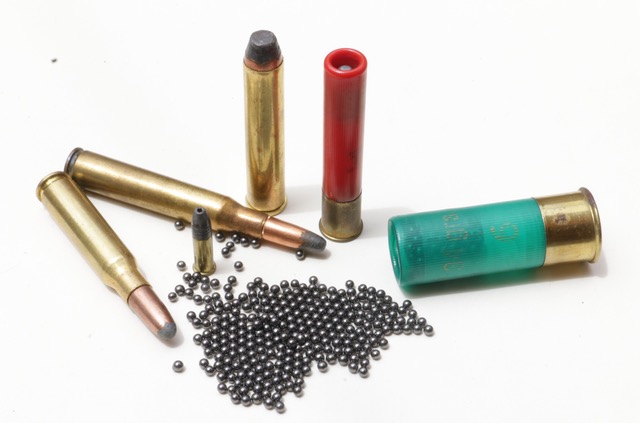
ECHA notes that discarding the meat around the wound and removing visible lead fragments is not enough to eliminate all the lead present, as microscopic particles may remain.
A study led by Mateo found elevated blood lead levels in 57.7% of griffon vultures in Spain, which hosts 90% of Europe’s griffon vultures. The research, published in Environmental Pollution, detected ammunition particles in 11% of pellets (the regurgitated masses of undigested material produced by birds of prey). The study concluded that the carcasses of large game animals containing bullet fragments were the main source of lead exposure. Mateo estimates that 3.7% of vultures may be ingesting lead ammunition on a daily basis.
“It is true that the vulture population is increasing rather than declining, but this is because they are increasingly feeding on livestock carcasses, which do not contain lead,” the researcher explains.
He adds that “without this food source, the population would decline significantly. If vultures fed only on game meat containing lead, an even greater proportion of individuals would be poisoned.”
For all these reasons, Rafael Mateo is one of more than 100 scientists who, this June, sent a letter to the Ministry of Agriculture, Fisheries and Food (MAPA) calling for a total ban, without exceptions, on the use of lead in hunting and fishing. Lead ammunition “poses a health risk to frequent consumers of game meat”, the signatories of the letter state.
Alternatives to lead
There are precedents for banning this heavy metal: the use of tetraethyl lead and other lead compounds in petrol to increase octane levels was banned in Spain in 2001.
“Thanks to this measure, a decrease in lead concentrations was observed both in the environment and in people,” says Joan O. Grimalt, a chemist and researcher at IDAEA.
ECHA also points to bismuth and tungsten shot as alternatives to lead. These options can be used in any shotgun, including older models that may not be suitable for steel shot. Nevertheless, most existing shotguns would not need to be replaced. Standard steel ammunition can be used in most proofed shotguns, the European agency notes.
Steel is currently a good substitute for lead and is already used in wetlands. “Hunting continues at the same levels. Hunters acknowledge that the ammunition is just as effective as lead,” Mateo explains. When shooting into the air, as in the hunting of thrushes and pigeons, “steel poses no risk because there is no possibility of ricochet”. In addition, the price of steel shot and cartridges is similar to that of lead, the IDAEA researcher notes.
“There are solutions to the risks posed by dietary exposure to lead from ammunition for both humans and wildlife, solutions that legislators and regulators must thoroughly consider and implement without delay,” Rafael Mateo states in an article published in 2025 together with researchers from the University of Cambridge (United Kingdom) and Aarhus University (Denmark) in the scientific journal Perspective.
Content produced by Fermín Grodira within the CSIC–BBVA Foundation Science Communication Grants Programme, 2024 Call.


